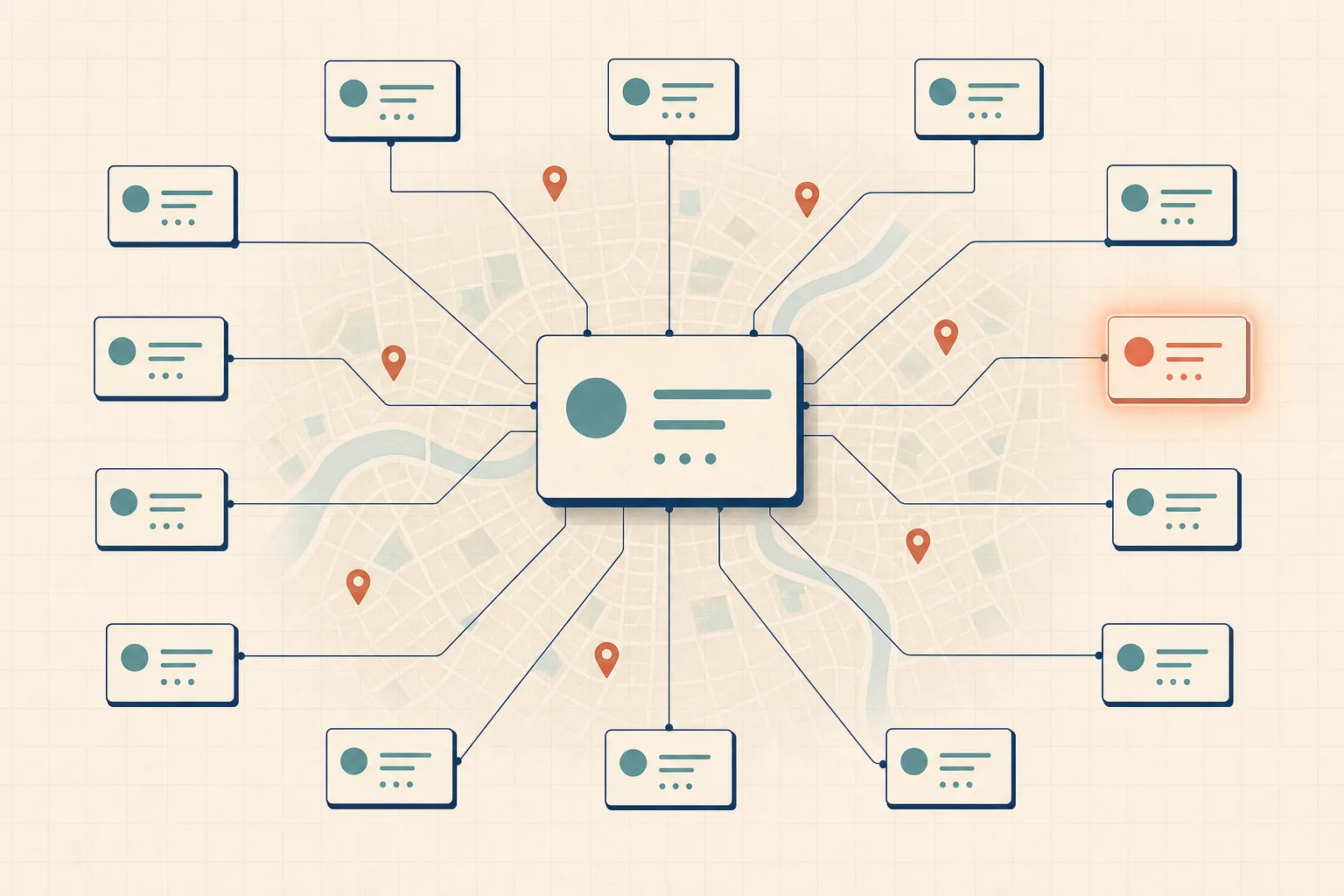
- A citation is any online mention of your name, address, and phone (NAP). The goal is consistency on the platforms that matter, not volume everywhere.
- Core stack: Google (obviously), Bing Places, Apple Maps, Facebook, the major data aggregators, and 10–20 directories specific to your industry and region.
- Fix conflicts at their source (aggregators feed downstream directories), then track everything in one sheet.
- Citation building is a cleanup discipline, not a growth hack. If someone sells you 300 citations for rankings, read this guide first.
What citations are and why consistency is the point
Google wants to trust that your business is real, located where you say, and reachable at the number you list. Every independent directory, map, and review site repeating your name, address, and phone is corroboration. When those sources disagree — an old address on Yelp, a disconnected number on an industry directory — the corroboration becomes contradiction, and both Google’s systems and actual customers lose confidence.
That’s the entire theory. Citations are verification infrastructure, not a volume game. This distinction has a decade of invoice-padding history behind it (“300 citations, $99”) that wasted small-business money on directories with no audience and no downstream data feeds.
The citation stack, in priority order
Tier 1 — own these completely:
- Google Business Profile — citation zero. (Guide.)
- Bing Places — feeds Bing and its partners, including voice/assistant surfaces that license Bing data.
- Apple Maps (via Apple Business Connect) — the default map on every iPhone.
- Facebook — business page data is consumed by people and platforms alike.
Tier 2 — the data aggregators. These companies compile and license business data to thousands of downstream sites. In the US market the historically significant ones are Data Axle (formerly Infogroup), Acxiom, and Foursquare (which powers many apps’ location data). Their records propagate slowly — weeks to months — which is exactly why fixing them first matters: corrections flow downstream while you work on Tier 1 and 3.
Tier 3 — vertical and regional directories. The honest, genuinely useful layer: industry directories your customers actually browse (legal, dental, home services, hospitality each have theirs), the local chamber of commerce, and legitimate regional guides. Choose by one test: would a customer plausibly find you here? If no, skip it — it’s cost without audience.
The NAP rules
- One canonical NAP string. Decide your exact business name, one phone number, and your full address — then copy-paste it everywhere. (Track it in the sheet below.)
- Phone number: one primary, consistent, local where possible. No tracking numbers in citations (see FAQ) — they break the very consistency you’re building.
- Address: storefront businesses list the real address; service-area businesses keep the address hidden on Google but should still keep private records consistent.
- Website URL: pick one canonical form (
https://+ your root domain, or your chosen landing page) and use it verbatim. - Formatting paranoia is overrated. “St.” vs “Street” and suite-number placement differences are low-stakes; search systems normalize these. A wrong phone number or an old address is what actually costs you.
The cleanup workflow
Step 1 — Discover. Search your exact business name in quotes, your phone number, and your old addresses/numbers. Check the major aggregators’ lookup tools and the Tier 1 platforms. List every profile found — claimed and unclaimed — in your tracking sheet.
Step 2 — Prioritize. Fix errors in this order: Google first, then Tier 1, then aggregators, then vertical directories. Fix an aggregator before the directories it feeds, or the bad data flows back.
Step 3 — Fix. Claim the profile where possible (stronger than an anonymous “suggest an edit”), correct the NAP, add your website link, then note the date in the sheet. Where a listing is a duplicate of your real one, request removal rather than editing it into a second “location.”
Step 4 — Track and re-verify. Quarterly, spot-check the core stack; aggregators are slow, so confirm propagation after ~60 days. Re-check whenever anything real changes: a move, a rebrand, a new phone system.
| Column | Example | Why |
|---|---|---|
| Platform | Yelp | Where the listing lives |
| URL | yelp.com/biz/… | Direct link for editing |
| Status | Unclaimed · Correct · Wrong phone · Duplicate | Current state |
| Canonical NAP used? | Yes / No | Consistency check |
| Last verified | 2026-08-15 | Freshness |
| Notes | “Aggregator-fed; fixed at Data Axle 7/28” | Propagation logic |
That table is the tracking sheet format we use — duplicate it per location if you run several (multi-location guide).
Measuring impact (honestly)
Citation cleanup outcomes are real but unspectacular: fewer customer calls to dead numbers, cleaner map presence, and a steadier profile. Practitioner evidence for ranking movement from citations alone is moderate at best — consistent with their role as trust verification rather than a ranking dial. Expect fixes to help most when your data was genuinely chaotic, and expect nothing dramatic when it was already clean.
The audit version of this guide is Section 2 (Citations & NAP) of the 2localseo audit checklist.
Sources and evidence notes
- NAP-consistency guidance and profile quality framing: Google Business Profile documentation — primary for the profile layer.
- Aggregator/downstream relationships: publicly documented data-licensing relationships (Data Axle, Acxiom, Foursquare) — primary for structure, propagation timing is practitioner-observed.
- Citation ranking impact: practitioner studies (e.g., Whitespark local ranking factors surveys) show citations as a meaningful but declining-velocity factor — survey-based evidence, directional.